Mobility data for traffic analysis, site planning, and data-driven decision-making
HomeMobility data for traffic analysis, site planning, and data-driven decision-making
Floating Car Data (FCD) and Floating Truck Data (FTD) for smart planning, efficient logistics, and informed decision-making
Every day, millions of vehicles generate billions of signals. This anonymized movement data from cars and trucks holds enormous potential: it reveals patterns in traffic, logistics, and consumer behavior—thereby laying the groundwork for better decisions in business, government, and research.
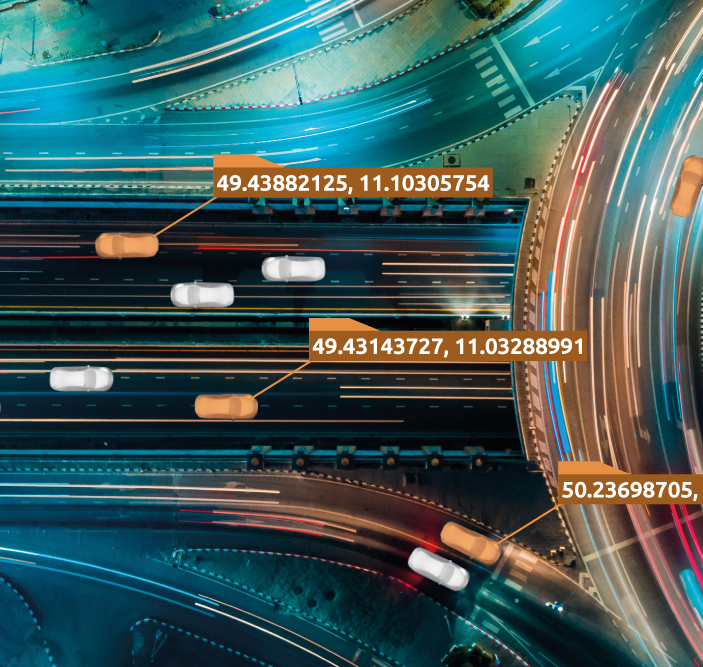
Our mobility data from Floating Car Data (FCD) and Floating Truck Data (FTD) provide: highly accurate traffic data that is GDPR-compliant, scalable, and practical—from traffic management to data-driven business development.
Why mobility data is crucial today
In a connected world, mobility data is a key driver of:
More efficient and resilient transportation systems
Competitive logistics and supply chains
Reduced environmental impact and CO₂ emissions
Higher quality of life in cities and regions
Data-driven business development and new business models
Informed location planning based on real-world movement patterns
Greater marketing efficiency through precise target audience and
foot traffic analysis
In this way, companies, public institutions, and research organizations are replacing assumptions with real-world behavioral data—and laying the groundwork for sustainable, economically sound, and forward-looking decisions, from smart cities to marketing strategies.
Understanding Traffic Patterns—in Detail and in Context
Flotating Car Data is based on anonymized travel data from passenger vehicles and provides insights into:
Speed and direction of travel
Timestamps and GPS locations
Frequencies, traffic volume, and duration of stay
With more than 4 billion signals daily, FCD enables, among other things:
Counts and traffic flow analyses by time period or area
Origin-destination matrices
Analysis of traffic density and traffic flows
Commuter analyses (private vehicle and public transit use)
Public transportation optimization
Potential analyses for airports
Analysis of visitor and customer flows, e.g., in shopping centers or at major events
FCDs make traffic and movement patterns visible—from individual intersections to entire regions. Available nationwide in Germany—other countries available upon request.
Floating Truck Data (FTD)
In-depth insights into logistics, freight transport, and infrastructure strain
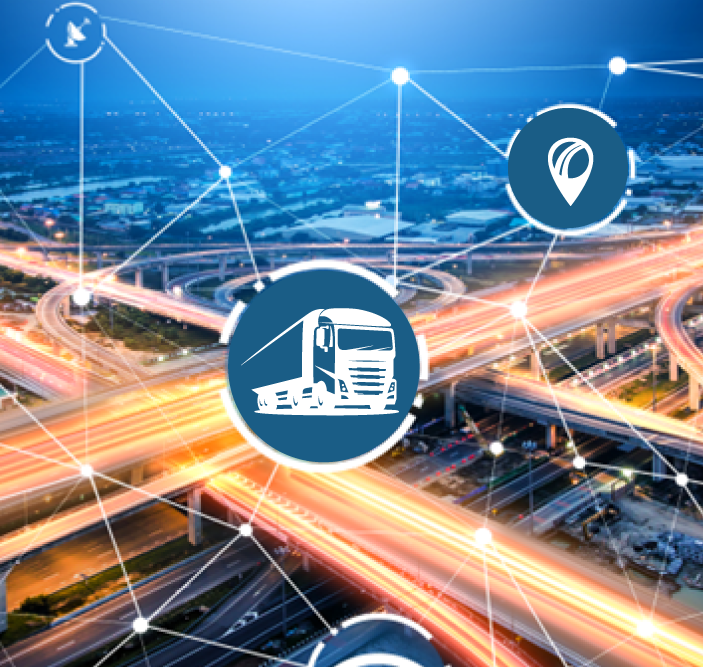
Floating Truck Data is based on motion and sensor data from commercial vehicles and provides an exceptionally comprehensive dataset with over 400 parameters, including:
Vehicle classification
Idle and charging times
Speeds and routes
GPS locations
Braking and driving behavior
FTD provides detailed, reliable insights for:
Supply Chain Analysis and Optimization
Route, Utilization, and Capacity Analyses
Infrastructure and Site Planning
Assessment of Freight Flows at Ports, Airports, and Rail Terminals
Risk and Security Analyses
Availability: Europe, Canada, and the U.S. – other countries upon request
Cities & Municipalities: intelligent traffic planning and management, parking planning, noise abatement planning, scenario planning using digital twins, implementation of smart city concepts
Ministries & Government Agencies: infrastructure planning, toll and traffic systems
Ports, airports, rail operators: Freight flow and capacity planning
Mobility & Automotive Sector
Automotive manufacturers: Vehicle development and data-driven services
Car-sharing and fleet operators: Optimization of demand, scheduling, and fleet utilization
Gas station and charging infrastructure providers: Data-driven site planning
Insurance & Financial Services
Auto Insurance: Risk Models Based on Real Driving Profiles
Banks & Investors: Valuation of Logistics and Commercial Sites
Retail & Real Estate Development
Retail & Shopping Centers: Analysis of Customer Foot Traffic
Real Estate Developers: Assessment of Location Attractiveness
Technology & Data Platforms
Navigation and map providers: Integration of high-quality mobility and traffic data
Data Privacy, Data Quality, and Delivery Formats
Privacy & Anonymization
No personal identifiability
No re-identification via routes or license plates
Use of aggregated data (e.g., number of vehicles per street/time), where necessary
GDPR-compliant anonymization and secure data provision
Data Quality & Timeliness
High data accuracy through software-based, continuous data generation
Daily updates
Suitable for historical analyses as well as near-real-time and timely operational evaluations
Accurate geocoding for precise spatial analyses
Deployment & Integration
Reliable delivery in the desired data format (e.g., CSV, JSON)—as raw data or in processed form
Additionally, upon request, geometry can be presented via GIS formats (GeoJSON,
Shapefile)
API-based access available
Integration into specific software solutions such as GIS or Digital Twin applications is possible
Flexible adaptation to individual use cases
Data Shapes the Future
Mobility data is more than just numbers. It is the key to:
Smart infrastructure
Resilient supply chains
Data-driven business development
Efficient marketing
Sustainable mobility and livable cities
Let's talk about your project
We help you unlock the potential of our mobility data—in a practical, transparent, and forward-looking way. Every challenge is unique. Together, we’ll find the right mobility data solution for your needs.
What is the difference between Floating Car Data (FCD) and Floating Truck Data (FTD)?
Floating Car Data (FCD) is based on anonymized movement data from passenger cars and provides information on traffic flows, speeds, dwell times, and origin-destination relationships. Floating Truck Data (FTD) comes from commercial vehicles and also includes extensive sensor data covering over 400 parameters, such as vehicle class, idle times, and braking behavior.
Can the mobility data be integrated into existing systems?
Yes. The data is provided in standard formats or via API and can be integrated into existing software solutions—such as GIS systems, planning software, data platforms, or digital twin applications.
Is the mobility data GDPR-compliant?
Yes. All mobility data is processed in compliance with the GDPR. The data is not personally identifiable, and there is no way to re-identify individual vehicles or drivers. Depending on the use case, we provide aggregated data (e.g., number of vehicles per street and time period) or further processed analyses.
In which regions are FCD and FTD available?
Floating Car Data is available nationwide in Germany; data for other countries is available upon request. Floating Truck Data is available for Europe, Canada, and the United States. Additional regions can be evaluated on a project-by-project basis.
For which use cases is mobility data particularly well-suited?
Mobility data is useful for a variety of applications, including transportation and infrastructure planning, logistics and route optimization, location and market analysis, smart city concepts, risk analysis, as well as data-driven business development and efficient marketing.
At what level of aggregation is the data available? /h3>
The data can be provided in a flexible manner—ranging from highly aggregated count and frequency data to detailed, anonymized movement data. The level of aggregation is determined on a case-by-case basis and depends on the use case, data protection requirements, and regulatory framework.